Seetrex's quantum line
Interactive quantum software.
Software to understand, test and build with quantum computing.
- 0installs: it runs in the browser
- PyMatchingresults validated against the reference
- Mobileand desktop
- EN · ESin two languages
Syndrome: more qubits, fewer errors
A quantum computer makes mistakes. Error correction spreads one “logical” qubit across many physical qubits and keeps watching for where faults appear. The idea sounds backwards: if every physical qubit can fail, why would things get better with more of them?
Syndrome lets you try it with your own hands. You place errors on a surface code grid, see the signals they leave and watch the decoder pair those signals up to correct them. The chart answers the question: as long as the hardware stays below a threshold, every increase in code size lowers the logical error rate. This is what Google demonstrated with its Willow chip (Nature, 2025).
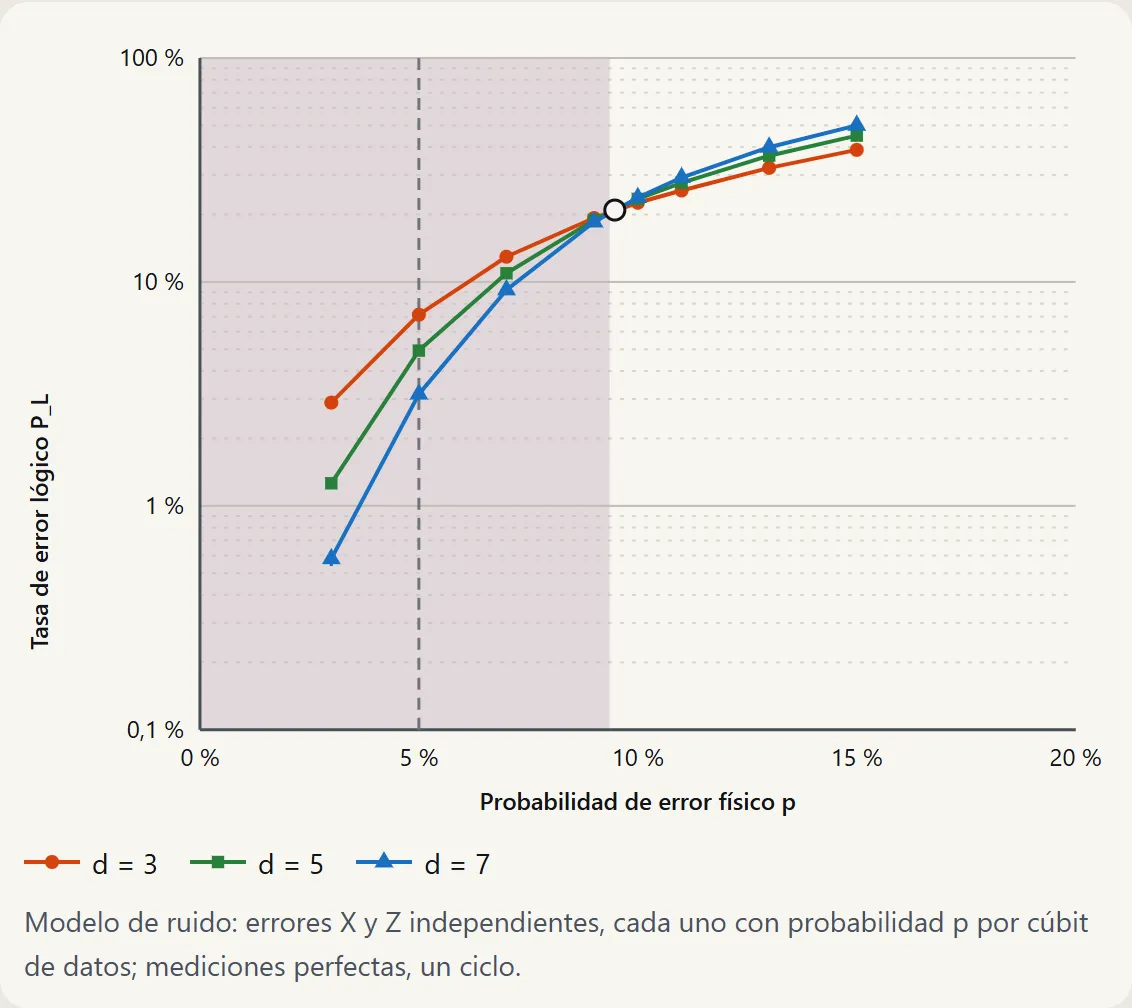
Syndrome’s results are compared with PyMatching, the reference decoder that researchers use, point by point and with a statistical criterion fixed in advance. How we check it.
What we are building
SEEQuant has three open lines of work. None has a date: a tool is published when it is finished and verified.
- Interactive software that makes the ideas of quantum computing visible, like Syndrome.
- Tools for people who build or use quantum computers, starting with error correction.
- Educational software for schools, universities and companies, with classroom licences. More in Classroom.
Syndrome
A quantum error correction simulator and game. Free, in English and Spanish.
Products
What you can use today and the ideas we are studying.
Lab
Short notes on what the tools show, with the source of every figure.
Would you use it in class or with your team?
We are exploring educational software for schools, universities and companies. Tell us what you need: it helps us decide what to build.
Go to Classroom